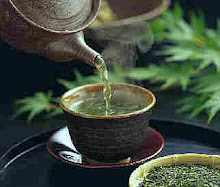
For more tea recipes please visit our website
Hot Ginger Tea
Ingredients:
4 Ginger Aid Tea bags
2 Pieces (3" ea) cinnamon Sticks
8 Whole cloves
6 cup Boiling water
2 Orange slices
Method:
Put tea bags, cinnamon sticks, cloves, ginger and sugar into a large teapot. Pour boiling water over and allow to steep 3 minutes. Remove tea bags and steep for 5 minutes. To serve, pour tea into cups and float a quarter slice of orange in each cup.
Monday, June 28, 2010

Monday, June 21, 2010
Tangerine Tea
For more Tea Recipes please visit our website
1 1/2 cups tangerine juice
· 1/4 sugar
· 1/4 tsp cinnamon
· 1/8 tsp cloves, ground
· 2 tea bags
Preparation:
In a saucepan, heat tangerine juice, water, sugar and spices until boiling. Reduce heat and simmer until sugar is completely dissolved. Remove from heat and add tea bags. Steep for 5 minutes. Strain out tea bags and serve hot.
Serves 4
1 1/2 cups tangerine juice
· 1/4 sugar
· 1/4 tsp cinnamon
· 1/8 tsp cloves, ground
· 2 tea bags
Preparation:
In a saucepan, heat tangerine juice, water, sugar and spices until boiling. Reduce heat and simmer until sugar is completely dissolved. Remove from heat and add tea bags. Steep for 5 minutes. Strain out tea bags and serve hot.
Serves 4
Tuesday, June 15, 2010
Onion Tea Soup
For more great Tea recipes please visit our website
2 tablespoons olive oil
· 4 large onions, sliced thin
· 2 cups low-sodium chicken broth
· 4 cups brewed tea (golden Assam, or any oolong tea)
· 1 bay leaf
· 1 teaspoon ground black pepper
· 2 teaspoons Worcestershire sauce
· 1 tablespoon Sherry or brandy
· 1 tablespoon grated Parmesan cheese
· 4 thin slices French bread (1 ounce each)
Heat the olive oil in a large saucepan. Add the onions and sauté until translucent, 3 to 4 minutes. Add the chicken broth, brewed tea, bay leaf, pepper and Worcestershire sauce. Bring to a boil. Lower the heat and simmer for 30 minutes. Remove the bay leaf. Add the Sherry or brandy.
While the soup is simmering, heat the oven to 400 degrees F. Sprinkle the Parmesan cheese over the bread and place on a baking sheet. Bake for 15 minutes or until crisp and the cheese has melted.
Place a slice of toast in the bottom of each of four soup bowls and pour one quarter of the soup over each.
Serves 4
2 tablespoons olive oil
· 4 large onions, sliced thin
· 2 cups low-sodium chicken broth
· 4 cups brewed tea (golden Assam, or any oolong tea)
· 1 bay leaf
· 1 teaspoon ground black pepper
· 2 teaspoons Worcestershire sauce
· 1 tablespoon Sherry or brandy
· 1 tablespoon grated Parmesan cheese
· 4 thin slices French bread (1 ounce each)
Heat the olive oil in a large saucepan. Add the onions and sauté until translucent, 3 to 4 minutes. Add the chicken broth, brewed tea, bay leaf, pepper and Worcestershire sauce. Bring to a boil. Lower the heat and simmer for 30 minutes. Remove the bay leaf. Add the Sherry or brandy.
While the soup is simmering, heat the oven to 400 degrees F. Sprinkle the Parmesan cheese over the bread and place on a baking sheet. Bake for 15 minutes or until crisp and the cheese has melted.
Place a slice of toast in the bottom of each of four soup bowls and pour one quarter of the soup over each.
Serves 4
Monday, June 14, 2010
Tea and breast cancer
Scientists have long noted that breast cancer is much less common in countries where green tea is regularly consumed. One Japanese study found a decreased risk of recurrence for early-stage cancer patients who drank three or more cups of green tea. This suggests at least the possibility that regular green tea consumption may help prevent recurrence of breast cancer in early-stage cases. A Chinese study found that women who consumed at least 26 ounces of green tea leaves each year had a 39-percent reduced risk of breast cancer compared to non-drinkers. Twenty-six ounces of dried leaves per year equates to only 300 cups of green tea over the course of a year, which equals less than one cup per day.
For more information on Tea and cancer please visit our website
For more information on Tea and cancer please visit our website
Sunday, June 13, 2010
Interesting Tea Facts and Info
Here are some interesting information and facts about tea that you may or may not know. This is part 1 and for more info please visit our website
Tea is the second most consumed beverage in the world after water.
·Tea contains about 50% less caffeine than coffee, making it a great alternative to those that are sensitive to caffeine intake.
·A cup of black tea has the most caffeine content, yet still amounts to half of what is in a cup of coffee. White, green, and oolong teas have even less.
·The expression "black tea" is also used to describe a cup of tea without milk ("served black"), similar to coffee served without milk or cream.
·Until the nineteenth century, solid blocks of tea were used as money in Siberia.
·In United States over 90 percent of folks brew their tea by tea bag.
·All tea, black, green, oolong and white tea come from the same plant, camellia sinensis. It’s the processing of the leaves that determines the color and classification of tea.
According to the U.S. National Cancer Institute, catechins (a type of antioxidant), has shown to reduce the number and size of tumors in laboratory animals, as well as inhibit the growth of cancer cells. White tea, due to its very high amount of these catechins claims to be more effective.
·Along with sunscreen and proper clothing, drinking just one cup of tea a day can help lower the risk of getting skin cancer. This 2007 report coming from the Journal of the American Academy of Dermatology.
·White tea may be the most delicate of teas, but it remains the most powerful! One cup of white tea has more antioxidants then a serving of broccoli, or ten cups of apple juice!
·Oolong tea which is a type falling between green and black tea, shows better results than green tea at helping folks lose weight. There are numerous studies that suggest oolong tea has fat burning properties as well as maintaining healthy skin by destroying free radicals!
·Benefits of tea including black tea are the same as all the other types too.
Tea is the second most consumed beverage in the world after water.
·Tea contains about 50% less caffeine than coffee, making it a great alternative to those that are sensitive to caffeine intake.
·A cup of black tea has the most caffeine content, yet still amounts to half of what is in a cup of coffee. White, green, and oolong teas have even less.
·The expression "black tea" is also used to describe a cup of tea without milk ("served black"), similar to coffee served without milk or cream.
·Until the nineteenth century, solid blocks of tea were used as money in Siberia.
·In United States over 90 percent of folks brew their tea by tea bag.
·All tea, black, green, oolong and white tea come from the same plant, camellia sinensis. It’s the processing of the leaves that determines the color and classification of tea.
According to the U.S. National Cancer Institute, catechins (a type of antioxidant), has shown to reduce the number and size of tumors in laboratory animals, as well as inhibit the growth of cancer cells. White tea, due to its very high amount of these catechins claims to be more effective.
·Along with sunscreen and proper clothing, drinking just one cup of tea a day can help lower the risk of getting skin cancer. This 2007 report coming from the Journal of the American Academy of Dermatology.
·White tea may be the most delicate of teas, but it remains the most powerful! One cup of white tea has more antioxidants then a serving of broccoli, or ten cups of apple juice!
·Oolong tea which is a type falling between green and black tea, shows better results than green tea at helping folks lose weight. There are numerous studies that suggest oolong tea has fat burning properties as well as maintaining healthy skin by destroying free radicals!
·Benefits of tea including black tea are the same as all the other types too.
Friday, June 11, 2010
Tea Salad Dressing
For more great tea recipes please visit our website
· 1 tablespoon olive oil
· 2 tablespoon balsamic vinegar
· ¼ teaspoon ground black pepper
· Pinch of finely ground dry Green Tea
· ½ teaspoon Dijon mustard
Mix in a small bowl and drizzle over salad.
Serves 2
· 1 tablespoon olive oil
· 2 tablespoon balsamic vinegar
· ¼ teaspoon ground black pepper
· Pinch of finely ground dry Green Tea
· ½ teaspoon Dijon mustard
Mix in a small bowl and drizzle over salad.
Serves 2
Wednesday, June 9, 2010
Honey Milk Tea – Hong Kong Style Recipe
Easy to make tea recipe Honey Milk Tea – Hong Kong Style Recipe
For more tea recipes and remedies please visit our website
Ingredients:
· 2 orange pekoe tea bags
· 1 cup boiling water
· 5 ice cubes
· 4 teaspoons sweetened condensed milk
· 3 teaspoons honey
Directions:
1. Steep the tea bags in hot water until the color turns dark red, about 3 to 5 minutes. Discard the tea bags and let the tea cool.
2. Combine the ice cubes, sweetened condensed milk, and honey in a glass or cocktail shaker. Pour in the tea and mix well. (If the tea is still warm, the ice may melt; add more ice if desired.) A strong, flavorful milk tea is ready for you to enjoy.
For more tea recipes and remedies please visit our website
Ingredients:
· 2 orange pekoe tea bags
· 1 cup boiling water
· 5 ice cubes
· 4 teaspoons sweetened condensed milk
· 3 teaspoons honey
Directions:
1. Steep the tea bags in hot water until the color turns dark red, about 3 to 5 minutes. Discard the tea bags and let the tea cool.
2. Combine the ice cubes, sweetened condensed milk, and honey in a glass or cocktail shaker. Pour in the tea and mix well. (If the tea is still warm, the ice may melt; add more ice if desired.) A strong, flavorful milk tea is ready for you to enjoy.
Thursday, June 3, 2010
Tea for the Heart
The question is tea good for the heart has been around since many centuries and much scientific research has been done on this subject especially since the early 1990’s. The health benefits of Tea for the heart are thought to be derived from ingredients known as "flavanoids", a type of antioxidant found in all types of tea.
This antioxidant acts as a neutralizing agent of "free radicals", a highly reactive molecule which travels around the body causing chemical reactions which can damage cells, including those in the heart tissues. Free radicals are directly linked to heart disease, stroke, cancer and aging.
People consuming at least one cup of tea a day may reduce their risk of heart attack by almost 50%, a study found. The American research program looked at tea and coffee drinking habits of almsot 700 people. The men and women who drank one or more cups of tea a day had a 44% reduction in heart attack risk compared to non tea drinkers. Other studies have produced much the same reuslts.
Already in the late 1960’s, American scientists noticed some interesting findings. While doing autopsies, they observed that the arteries of tea drinking Chinese Americans had only two thirds as much coronary artery disease as Caucasian coffee drinkers. Since then, many more studies have shown a link between drinking tea and preventing heart disease.
In 2003, the Archives of Internal Medicine published a study in which, over a twelve-week period, 240 Chinese men and women with moderately high cholesterol were given either a green tea extract augmented with flavanoids from black tea or a placebo with no tea. After the twelve weeks, the placebo group had no changes in their total cholesterol or their “bad” LDL cholesterol levels. In the tea group, however, total cholesterol dropped by 11.3 percent and LDL by 16.4 percent. At the same time, the “good” HDL cholesterol levels increased by 2.3 percent in the tea-drinking group, while the placebo group saw an increase of only 0.7 percent.
Tea also protects the heart by helping to lower blood pressure. Hypertension, or high blood pressure, is the most common form of heart disease, and is a major risk factor for heart-related death. A study of Chinese tea drinkers published in 2004 showed that drinking as little as a half-cup of green or oolong tea per day may lower the risk of high blood pressure by nearly 50 percent. Researchers found that men and women who drank tea on a daily basis for at least a year were much less likely to develop hypertension than those who didn’t, and the more tea they drank, the bigger the benefits. Those who drank at least a half-cup of moderate strength green or oolong tea per day for a year had a 46-percent lower risk of developing hypertension than those who didn’t drink tea. Among those who drank more than two and a half cups of tea per day, the risk of high blood pressure was reduced by 65 percent.
As you can see it may be in everybody’s interest to have a delicious cup of tea daily, not only for the joy of it but its health benefits.
This antioxidant acts as a neutralizing agent of "free radicals", a highly reactive molecule which travels around the body causing chemical reactions which can damage cells, including those in the heart tissues. Free radicals are directly linked to heart disease, stroke, cancer and aging.
People consuming at least one cup of tea a day may reduce their risk of heart attack by almost 50%, a study found. The American research program looked at tea and coffee drinking habits of almsot 700 people. The men and women who drank one or more cups of tea a day had a 44% reduction in heart attack risk compared to non tea drinkers. Other studies have produced much the same reuslts.
Already in the late 1960’s, American scientists noticed some interesting findings. While doing autopsies, they observed that the arteries of tea drinking Chinese Americans had only two thirds as much coronary artery disease as Caucasian coffee drinkers. Since then, many more studies have shown a link between drinking tea and preventing heart disease.
In 2003, the Archives of Internal Medicine published a study in which, over a twelve-week period, 240 Chinese men and women with moderately high cholesterol were given either a green tea extract augmented with flavanoids from black tea or a placebo with no tea. After the twelve weeks, the placebo group had no changes in their total cholesterol or their “bad” LDL cholesterol levels. In the tea group, however, total cholesterol dropped by 11.3 percent and LDL by 16.4 percent. At the same time, the “good” HDL cholesterol levels increased by 2.3 percent in the tea-drinking group, while the placebo group saw an increase of only 0.7 percent.
Tea also protects the heart by helping to lower blood pressure. Hypertension, or high blood pressure, is the most common form of heart disease, and is a major risk factor for heart-related death. A study of Chinese tea drinkers published in 2004 showed that drinking as little as a half-cup of green or oolong tea per day may lower the risk of high blood pressure by nearly 50 percent. Researchers found that men and women who drank tea on a daily basis for at least a year were much less likely to develop hypertension than those who didn’t, and the more tea they drank, the bigger the benefits. Those who drank at least a half-cup of moderate strength green or oolong tea per day for a year had a 46-percent lower risk of developing hypertension than those who didn’t drink tea. Among those who drank more than two and a half cups of tea per day, the risk of high blood pressure was reduced by 65 percent.
As you can see it may be in everybody’s interest to have a delicious cup of tea daily, not only for the joy of it but its health benefits.
Subscribe to:
Comments (Atom)